The right pack depends on whether you need a sealed cupboard meal, a dry mix that still requires cooking, or a chilled product with better texture. By comparing format, portion, preparation, storage, ingredients and eating situation, you can choose a veg biryani that matches your time, equipment and appetite instead of trusting the word “instant” alone.
Key takeaways
- Confirm whether the pack is cooked, chilled, frozen or a dry mix.
- Use the heating time and method printed on the pack.
- Choose portions based on appetite, sides and eating occasion.
- Check ingredients, expiry date, seal and delivery temperature before eating.
Start by identifying the biryani format and portion
Start with the pack format and edible portion, not the brand name or price. Ready to eat foods veg biryani options may be a complete cooked meal, a chilled or frozen tray, or a dry mix that still needs water and cooking. “Instant” does not automatically mean ready to eat.
| Format | What to look for | Preparation and storage |
|---|---|---|
| Retort pouch or can | Sealed, commercially sterilised cooked rice; net weight and servings per pack | Heat as directed; store unopened at room temperature |
| Chilled or frozen pack | Cold-chain label, use-by or best-before date, and pack temperature requirement | Refrigerate or freeze promptly; reheat before eating |
| Dry instant mix | Dry rice, vegetables and seasonings; stated water quantity and cooking time | Add measured water and cook; store unopened in a dry cupboard |
1. Check whether the pack is one serving or several. A 300 g pack labelled as two servings is not directly comparable with a 250 g single-serving pack.
2. Compare nutrition on the same basis: per serving with per serving, or per 100 g with per 100 g. Note the stated protein, sodium, vegetables and energy after confirming the serving size.
3. Read the preparation line before buying. A retort meal needs reheating, while a dry mix needs water, cooking time and equipment; too little water leaves hard rice, and too much creates a soft pulao-like texture.
4. Treat ready to eat foods biryani as a meal, not a dry snack: portion size, required effort and storage life determine whether the format suits you.
Use the heating method printed on the pack
Hard rice usually means the instant veg biryani did not receive the stated water quantity or rehydration time; excess water creates a soft, pulao-like texture. Retort biryani needs a different method because it is already cooked and commercially sterilised, while an instant mix needs water and cooking.
1. Identify the format. For a retort pouch or can, follow the printed microwave, saucepan or hot-water instructions. Do not microwave a sealed pouch unless the label specifically permits it; open, vent or transfer it as directed.
2. Measure the exact water quantity for instant veg biryani. Use the cup or millilitre measure printed on the pack, not an estimate. Too little water leaves rice and vegetables hard, while too much weakens the texture and flavour.
3. Use the stated cooking equipment and time. If the instructions require a covered pan, keep it covered so steam can rehydrate the rice. Do not treat “instant” as meaning ready to eat directly from the packet.
4. Stir when instructed, especially after microwave heating. Microwaves can leave the centre cooler than the edges, so allow the printed standing time before serving.
5. Check the centre before eating. Open carefully, stir through the middle and confirm the entire portion is steaming hot. Discard rice left warm for a prolonged period, because Bacillus cereus can multiply during slow cooling or warm storage.
Match the format to your eating situation
Choose a single-serve retort pouch for a work lunch, fast dinner, travel or an emergency cupboard meal; choose chilled or frozen biryani when texture matters most.
The best ready to eat foods biryani choice depends on heating access, storage space and how many people you are feeding.
| Option | Best fit | Trade-off |
|---|---|---|
| Retort pouch or can | Work lunch, travel, fast dinner, emergency cupboard storage | Stores unopened at room temperature, but reheating is still required |
| Chilled or frozen pack | One person or a family meal when a refrigerator or freezer is available | Usually gives better rice texture, but needs cold-chain delivery and prompt refrigeration |
| Dry instant mix | Fast dinner when you accept adding water and cooking | Stores for longer and lets you adjust water and accompaniments, but requires cookware and preparation |
For a work lunch, confirm that you have a microwave or stovetop and enough time to heat the centre thoroughly. A sealed retort pouch is more practical than chilled food if the office has no refrigerator.
For one person, compare the declared serving size before choosing among veg biryani meal options; a family pack creates leftovers and extra storage work. For several people, a multi-serve chilled, frozen or retort pack reduces individual packaging, but check whether the total quantity matches appetites.
Use a retort pack for travel only when it remains sealed and the label permits room-temperature storage. Do not treat chilled or frozen biryani like a dry snack. Once warm, rice-based food needs prompt handling.
Check the label, ingredients and delivery conditions
Before paying, verify the pack format, ingredients, serving size, storage condition, date marking and delivery temperature. These checks separate suitable ready to eat foods veg biryani options from a meal that arrives spoiled, under-portioned or unsuitable for your diet.
1. Read the front and back labels. Confirm the green vegetarian symbol, net weight, number of servings, energy, protein, carbohydrate, fat and sodium values. Compare products per 100 g or per serving, not one product’s serving with another’s. Check whether the ingredients list includes vegetables, paneer, soy, nuts, dairy or allergens you avoid.
2. Look for the food business’s FSSAI licence or registration number, batch or lot number, manufacture or packing date and best-before date. Reject a pouch or tray with a broken seal, swelling, leakage, rust or a missing label. A best-before date does not make damaged packaging safe.
3. Match storage to your home. A commercially sterilised retort pouch or can can remain unopened at room temperature; chilled or frozen biryani needs prompt refrigeration or freezing. A dry instant mix needs water and cooking, so do not treat it like a ready-to-eat retort meal.
4. Ask the shop or delivery service how the order travels. If you buy ready to eat foods in Ghatkopar, confirm the delivery area, arrival condition and time outside refrigeration. Rice foods can support Bacillus cereus growth after slow cooling or warm storage; follow the printed storage and post-opening instructions.
5. Use the same checks when ordering from Sujyoti Foods LLP: confirm which catalogue entry and pack format you are receiving, rather than assuming similar names mean identical portions or preparation.
If the label is unclear, choose another pack.
Related product
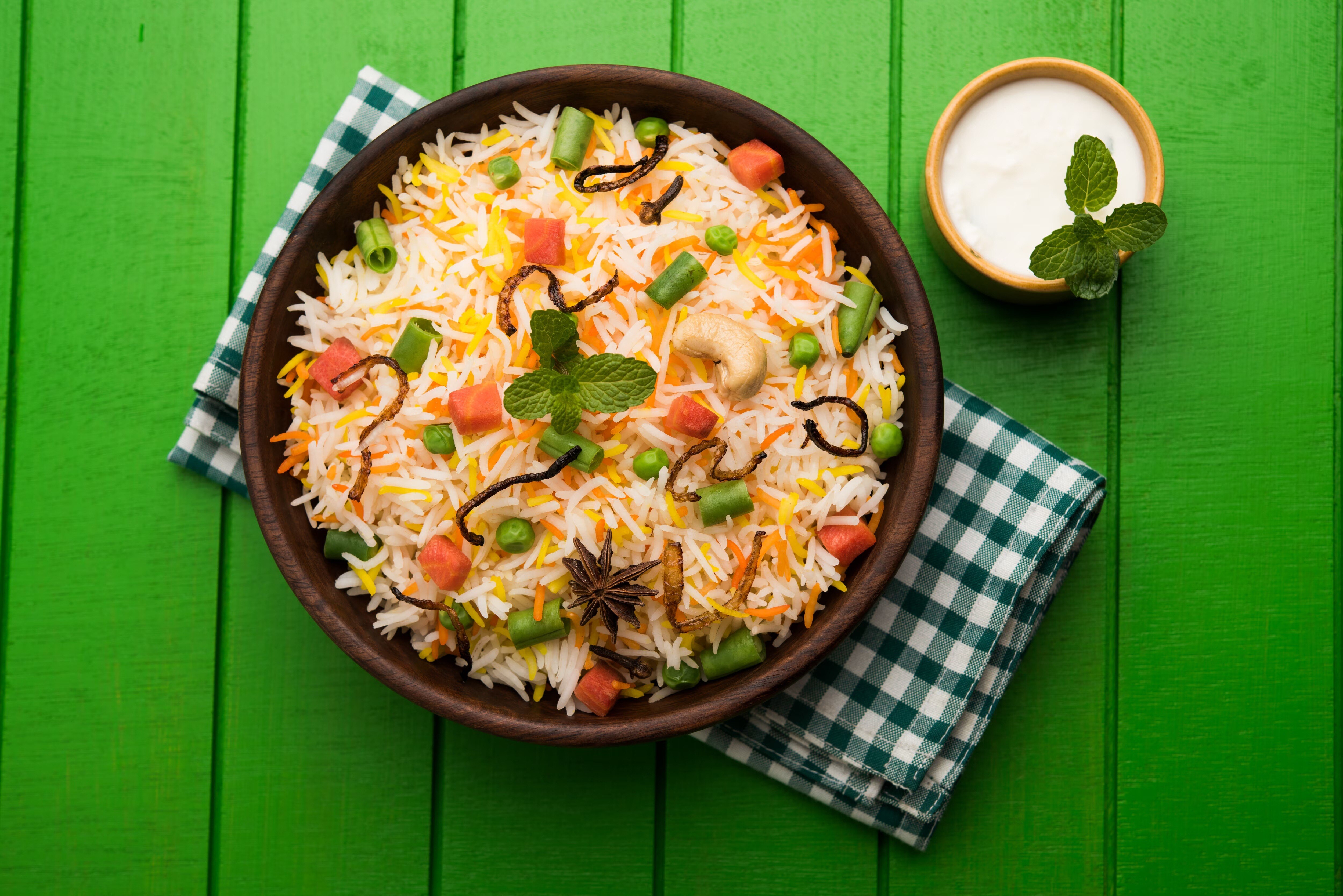
 | Snacks Vegtable Biryani simple called as Veg biryani/Biriyani is a rice dish mixed with varieties of fried vegetables View product → |
Store opened biryani safely and judge the complete meal
Refrigerate leftover biryani within two hours of serving, or within one hour if the room is above 32°C. Transfer it to a shallow, covered container so the rice cools quickly, then eat it within three to four days.
Reheat only the portion you need until the centre reaches 74°C and is steaming hot; discard rice left out longer than the safe limit.
Compare ready to eat foods biryani options by checking the meal, not just the packet’s front label:
- Texture: The rice should remain separate and moist after reheating. Hard grains indicate insufficient water or heating; wet, clumped rice suggests excess moisture.
- Vegetables: Look at the ingredient list and visible contents. A few peas or carrots do not make a high-vegetable meal.
- Protein: Check grams per serving and identify a substantial source such as lentils, chickpeas, paneer, soy or another legume. Rice and vegetables alone provide limited protein.
- Salt: Compare sodium or salt per 100 g, then account for pickle, papad, raita and packaged sides. A hot spice profile does not mean low salt.
For veg biryani meal options, compare the declared serving size before comparing nutrition figures. A two-serving pack can look moderate per serving but become a large, salty meal when eaten alone.
If the meal lacks protein or vegetables, add a simple side rather than doubling the rice; if the texture fails after correct heating, choose a chilled or frozen option next time.
Frequently asked questions
Is instant veg biryani always ready to eat?
No. A cooked pouch or tray is ready to heat, while a dry mix needs water and cooking. Check the preparation instructions before buying.
How should you heat ready-to-eat foods veg biryani?
Follow the pack method exactly, including whether to pierce the pouch, transfer the biryani to a dish or stir halfway through heating.
What should you check when buying ready-to-eat foods biryani?
Check the serving size, ingredients, allergens, batch or lot number, use-by date, intact seal and storage temperature. Reject packs that arrive warm when chilled or frozen.
How long can opened veg biryani be stored?
Refrigerate leftovers promptly in a covered container and follow the pack’s storage instruction. Reheat only the portion you will eat, and discard food left at room temperature for too long.