The spice character begins before the dough reaches the tawa: coriander must be dried, cumin and chilli must be balanced, and curd must be added without making the mixture wet. By following the sequence below, you can prepare thin, evenly crisp khakhra, understand how roasting changes each spice, and judge a packaged version by its ingredients and texture.
Key takeaways
- Dry coriander thoroughly to prevent sticky khakhra dough.
- Rest the curd-based dough before rolling thin discs.
- Roast until the centre dries and spices become aromatic.
- Check ingredient order, spice details and packaging before buying.
Prepare the coriander and build a layered spice mix
Wash ½ cup fresh coriander leaves and tender stems, then drain and pat them completely dry. Finely chop them; coarse stems make thin discs harder to roll, while water clinging to leaves can turn the dough sticky. Grate 1 teaspoon ginger, squeeze out excess juice, and keep it ready.
For 2 cups whole-wheat atta, combine the dahi kothmir khakhra spices before adding them to the flour. This distributes small quantities evenly and prevents a concentrated chilli or ajwain patch from scorching.
The phrase how dahi kothmir khakhra for uses spices is best answered through this layered approach: coriander leads, cumin warms, and chilli supplies controlled heat.
- Use 1 teaspoon cumin powder for an earthy base.
- Add ¼ teaspoon ajwain for a thyme-like aroma; too much tastes bitter.
- Add ½ teaspoon red-chilli powder and ¼ teaspoon turmeric for heat and colour.
- Add 1 teaspoon squeezed grated ginger, ½ teaspoon salt, and a pinch of hing.
- Stir in the chopped coriander last, keeping it loose rather than crushing it.
| Spice | Amount for 2 cups atta | Purpose |
|---|---|---|
| Cumin | 1 tsp | Warm, earthy foundation |
| Ajwain | ¼ tsp | Sharp herbal lift |
| Chilli powder | ½ tsp | Heat |
| Turmeric | ¼ tsp | Colour and mild earthiness |
| Ginger and hing | 1 tsp and pinch | Fresh warmth and savoury depth |
Mix, rest and roll the curd-based dough
For a reliable dahi kothmir khakhra preparation, add curd gradually rather than treating it like a fixed water measurement. Its moisture, acidity and milk solids affect hydration, tenderness and browning, while wet coriander can make the dough sticky.
1. Put whole-wheat atta in a wide bowl and mix in salt and the prepared spice blend. Add finely chopped, well-drained kothmir so the pieces distribute evenly instead of forming damp clumps.
2. Add dahi a spoonful at a time while mixing. Bring the flour together with your fingers, adding only enough water to handle thick curd; thin curd may need none. The dough should feel firm and smooth, not wet or tacky.
3. Knead firmly for 5–7 minutes until no dry flour remains and the coriander is spread through the dough. If it feels sticky, use a small amount of flour; excess flour makes the finished khakhra hard.
4. Cover the dough and rest it for 15–20 minutes. This lets the flour hydrate and relaxes the gluten, so the portions roll thinly instead of springing back or tearing.
5. Divide the dough into equal portions and shape each into a smooth ball. Roll one portion on a lightly floured surface, turning it often, until it forms an even disc about 1–2 mm thick.
6. Correct thick centres or ragged edges before moving on. Uneven discs cook poorly: the edges dry first while a thick centre stays leathery. Keep the remaining portions covered so they do not crust.
Roast the khakhra until the spices bloom and the centre dries
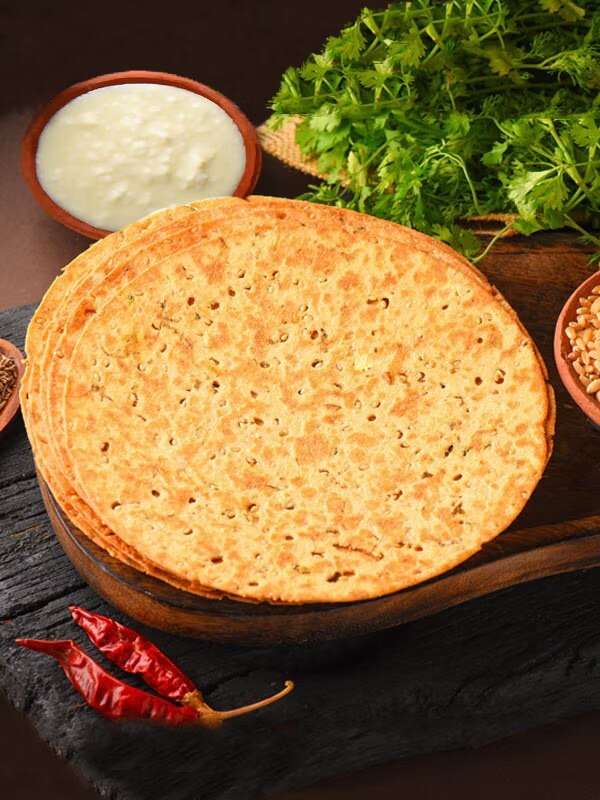
A thin, evenly rolled disc makes a crisp dahi kothmir khakhra snack; a thick centre traps curd moisture and stays leathery. Uneven coriander pieces or dry spice clumps create raised spots that scorch before the rest dries, so keep the surface smooth and the thickness consistent.
Use the tawa in stages:
- Heat it to medium, then place the disc on the dry surface. Cook until the underside develops small pale spots and the top loses its raw, soft appearance.
- Turn the disc and reduce to low-medium heat. This slower heat lets steam escape from the curd-based centre instead of browning the outside too quickly.
- Turn it repeatedly, pressing from the centre towards the edges with a cloth, spatula or khakhra press. Move across the whole disc; pressing only the rim leaves a chewy middle.
- Continue until both sides show light, even roasting and the disc feels dry and firm rather than flexible. Keep the tawa below smoking heat so cumin, ajwain, chilli and other dahi kothmir khakhra spices release aroma without turning bitter.
- Transfer it to a plate only when the steam has largely stopped. It will become crisper as it cools.
Pressing flattens bubbles and forces trapped moisture out; turning exposes each side to the dry heat. High heat gives quick colour but seals a damp centre, producing a khakhra that tastes roasted yet bends instead of snapping.
Fix moisture, uneven cooking and fading crispness
A reliable dahi kothmir khakhra preparation controls moisture before it reaches the pan. Add dahi gradually; thick dahi may need a spoonful of water, while thin dahi needs flour added in small amounts. Stop when the dough feels firm and pliable, not sticky. Excess flour later produces a hard, dense khakhra.
- Pat washed coriander completely dry before chopping. Wet leaves loosen the dough, while large pieces create bumps that cook unevenly.
- Rest the mixed dough for 15 to 20 minutes, covered. This lets flour absorb the dahi and prevents dry edges from cracking during rolling.
- Roll a smaller disc to an even 1 to 2 millimetres. A thick centre stays raw and leathery while thin edges burn; patch holes instead of stretching the disc thinner.
- Crush spice clumps before mixing and keep coriander pieces fine. Local piles of chilli or cumin scorch before the dough cooks through.
- Roast over medium-low heat, turning often and pressing from the centre outward. If the rim browns while the middle remains soft, lower the heat and continue pressing rather than increasing the flame.
Crispness fades when steam is trapped after cooking. Move each khakhra to a wire rack or dry plate and let it cool fully before stacking or sealing; packing it warm softens the centre.
If a cooled piece loses its snap, warm it briefly on a dry pan, cool it again, then store it in an airtight container away from humidity.
Choose a packaged version by its spice and ingredient evidence
Read the ingredient list before you buy dahi kothmir khakhra. Look for wheat flour followed by curd, yogurt, or yogurt powder, plus coriander, kothmir, or coriander seasoning; “yogurt flavour” alone does not prove a curd-based dough. Coriander should appear as an ingredient, not only in the product name.
Use this label check:
- Cumin or jeera signals the warm, earthy base; ajwain, ginger, turmeric and chilli show how the blend is built.
- Check the declared chilli level before opening the pack. Heavy chilli, hing or ajwain can hide the coriander and mild tang.
- Prefer a sealed, dry pack with no condensation, soft patches or crushed, greasy-looking pieces. Moisture turns a crisp dahi kothmir khakhra snack leathery.
- If the pack has a transparent window, reject discs with thick centres, badly uneven edges or large coriander clumps; those areas cook at different speeds.
| Label or pack evidence | What it suggests | Your decision |
|---|---|---|
| Yogurt, curd or yogurt powder listed | Real dairy tang is part of the formulation | Prefer |
| Yogurt-style flavour only | Flavour is added without clear curd evidence | Compare carefully |
| Coriander or kothmir listed | Herb note comes from coriander seasoning | Prefer |
| Intact, dry seal and evenly coloured discs | Better chance of retained crispness | Choose |
If you buy dahi kothmir khakhra from Sujyoti Foods LLP, use these checks rather than assuming every retailer uses the same spice blend.
Related product
 | Snacks Dahi Kothmir Khakhra is a combination of curd and kothmir. It is natural and crispy in taste and will freshen your taste buds as you take a bite of... View product → |
Frequently asked questions
How do you prepare coriander for dahi kothmir khakhra?
Wash ½ cup coriander leaves and tender stems, drain and pat them completely dry, then chop them finely. Grate 1 teaspoon ginger and squeeze out excess juice.
Why should dahi kothmir khakhra dough rest before rolling?
Resting gives the flour time to absorb moisture from the curd and coriander, making the dough easier to roll without excessive sticking or tearing.
How do you know when dahi kothmir khakhra is properly roasted?
Roast the discs until they are evenly crisp, the centre feels dry, and the spices smell aromatic rather than raw. Press gently during roasting for even cooking.
What causes soft or uneven dahi kothmir khakhra?
Excess moisture, thick centres, uneven rolling or insufficient roasting can leave khakhra soft. Use dry coriander, roll uniformly and continue roasting until the centre dries.
What should you check when buying packaged dahi kothmir khakhra?
Check the ingredient list for coriander, curd or dairy ingredients and named spices, then inspect the seal, batch details, best-before date and pack for moisture or breakage.