The flavour depends on when each spice enters the dough, how much moisture the curd and coriander add, and how slowly the thin sheet is dried on the tawa. By following the sequence, you can make a home version with balanced tang, coriander freshness and toasted spice aroma, then judge whether a packaged khakhra matches that profile.
Key takeaways
- Mix spices, coriander and curd into the dough for flavour throughout.
- Add curd gradually because excess moisture makes rolling and crisping difficult.
- Rest briefly, roll thinly and cook on a medium-hot tawa.
- Compare packaged khakhra by ingredients, spice distribution, seal and crispness.
Which spices belong in dahi kothmir khakhra?
A practical home dough uses wheat flour, curd, finely chopped coriander, salt, red chilli, cumin or cumin powder, turmeric, ginger and oil. These dahi kothmir khakhra spices are mixed into the dough, not sprinkled only on top. Curd supplies acidity and mild tang while its moisture helps bind the flour.
For the search phrasing “how dahi kothmir khakhra for uses spices,” the key point is that dahi and kothmir enter the dough itself. This is a useful home ingredient list, not a confirmed copy of any packaged product formula.
No single legally fixed dahi kothmir spice blend exists, so the ingredient panel is the authority for a commercial pack.
| Ingredient | Contribution | Practical use |
|---|---|---|
| Wheat flour | Structure | Forms the dough and thin, crisp sheet |
| Curd | Acidity and balance | Softens the flour and balances spice |
| Finely chopped coriander | Green, citrus-like freshness | Mix through the dough |
| Salt | Sharpens flavour | Add with the dry ingredients |
| Red chilli | Heat | Adjust to your tolerance |
| Cumin or cumin powder | Earthiness | Use powder for even distribution |
| Turmeric | Rounded savoury depth | Add a small amount for colour and flavour |
| Ginger | Warm aroma | Use finely grated or dried powder |
| Oil | Tenderness and easier handling | Knead a little into the dough |
| Hing, ajwain, sesame or black pepper | Optional savoury, herbal, nutty or peppery notes | Choose according to the flavour you want |
Fresh coriander gives the brightest herbal result. Optional spices can vary by household, but “masala khakhra” alone does not prove a product is specifically dahi kothmir khakhra.
How should coriander, curd and dry spices enter the dough?
The correct dahi kothmir khakhra preparation keeps water under control from the start: dry the coriander, distribute the spices through the flour, and add curd gradually rather than pouring in a fixed amount.
1. Wash the coriander leaves and tender stems, drain them thoroughly, then pat them dry. Let them air-dry briefly before chopping them finely. Wet leaves carry extra water into the dough; large pieces can tear a thin rolled sheet.
2. Mix wheat flour, salt, chilli powder, cumin powder, turmeric and ginger powder first. This distributes the powdered spices evenly instead of leaving hot or bitter patches. Add optional toasted, ground cumin, ajwain, sesame or black pepper next.
3. Fold in the dry chopped coriander. Add curd gradually with oil while kneading until the dough feels firm and pliable, not sticky or slack. Curd thickness varies, so adjust by feel rather than following one fixed liquid measure.
Fresh coriander gives the strongest herbal, green and citrus-like flavour, but it adds moisture and creates visible flecks. Dried coriander or coriander powder gives more even distribution, a toasted note and easier storage.
| Formulation | Flavour and texture | Best choice |
|---|---|---|
| Fresh chopped coriander with curd | Herbal, moist and more moisture-sensitive | Immediate home preparation |
| Dried coriander leaves | Milder herbal flavour with less added water | A firmer dough or longer storage |
| Coriander powder | Even spice distribution and toasted coriander character | Uniform flavour without leaf pieces |
Stop adding curd as soon as the dough comes together. Extra moisture weakens the sheet, makes rolling sticky and leaves the finished khakhra softer.
How does curd moisture change resting, rolling and crispness?
Curd moisture determines whether dahi kothmir khakhra becomes crisp or stays soft inside. Curd hydrates the flour, while its acidity softens the dough. Cover it and rest it briefly after mixing; this lets the flour absorb moisture and reduces spring-back during rolling.
An overly wet dough turns sticky, demands extra flour, rolls unevenly and takes longer to dry. That combination can leave a soft centre even when the surface looks cooked.
- Divide the dough into small, even portions and keep them covered.
- Roll one portion at a time into a very thin, even disc.
- Before cooking, lift the disc gently. It should come away without stretching or sticking.
Uniform thickness controls drying. Thick patches retain moisture, while thin edges darken before the centre becomes crisp. This is why moisture control matters as much as the dahi kothmir khakhra spices in the preparation.
| Dough choice | Texture and flavour | Practical result |
|---|---|---|
| Higher curd proportion | More tang and tenderness | Softer dough; harder to dry fully |
| Firmer dough | Less tenderness, easier handling | Presses dry more readily and stores crisp |
Use curd gradually because its thickness varies; adjust by feel rather than a fixed liquid measure. A short covered rest is useful, but a long rest will not rescue slack dough. For crisp storage, choose a firm, pliable dough that rolls thin without extra flour.
How does cooking turn the spice blend into roasted flavour?
A low to medium-low tawa develops roasted flavour without scorching the chilli and turmeric. High heat can darken powdered dahi kothmir khakhra spices before the curd-based dough has dried.
1. Place the thin rolled disc on the warmed tawa. Cook the first side until faint bubbles appear and the surface shows light colour changes. It should look set, not deeply browned.
2. Turn the disc and press it gently with a folded cloth, spatula or khakhra press. Keep turning it at short intervals so both sides dry gradually rather than one side burning.
3. Press across the centre and edges, using steady light pressure. This drives steam out and dries the sheet; it prevents large soft pockets from forming inside the khakhra.
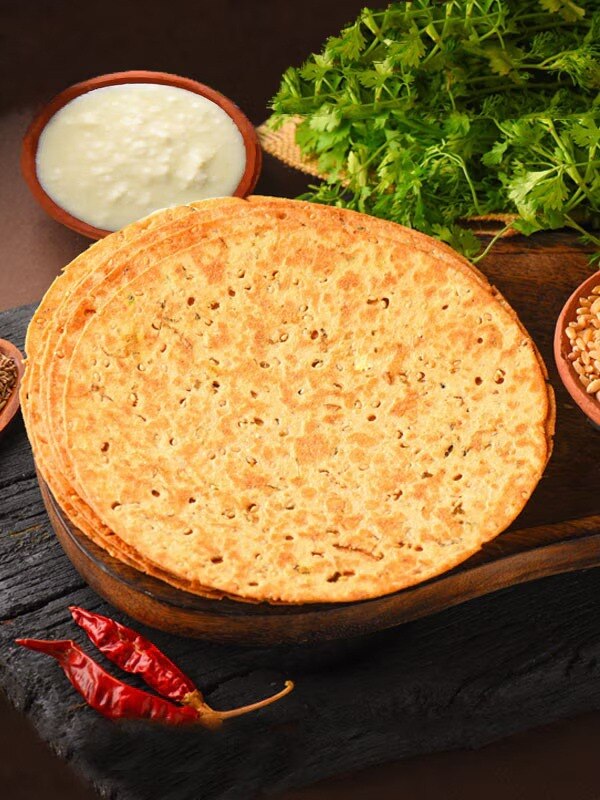
4. Continue until the khakhra feels rigid, bends only slightly and has no cool or flexible centre. Let it cool before judging the finish: a properly dried sheet gives a dry, crisp break.
For a stronger roasted aroma, dry-toast cumin or ajwain before grinding and mixing them into the dough. Whole spices added directly will toast during tawa cooking. Reheating a finished khakhra intensifies toasted notes, but an overheated pan can burn powdered spices quickly. Lower the heat if the surface darkens before the sheet becomes firm.
How can you compare a home recipe with a packaged khakhra before buying?
A home recipe is a flavour guide, not the exact commercial formula. Fresh coriander and curd make a home batch more sensitive to moisture, while packaged khakhra is formulated and dried to withstand storage and transport.
| Home batch | Packaged khakhra |
|---|---|
| Fresh curd and coriander | Dahi or milk ingredient may be processed or dried |
| Texture changes with moisture and drying time | Formulated for a consistent crisp texture |
| Best judged after complete cooling | Designed for sealed storage and transport |
| Recipe proportions vary by cook | Ingredient panel identifies what the maker used |
Before you buy dahi kothmir khakhra, inspect the pack and label rather than relying on the word “masala”:
- Look for dahi or a named milk ingredient, coriander, and the listed spices such as cumin, chilli, turmeric or ginger.
- Treat “masala khakhra” alone as insufficient proof that the product is dahi kothmir.
- Check that the seal is intact and read the packed-on or best-before information.
- Reject a pack that feels softened by trapped moisture instead of dry and crisp.
For the search “khakhra with spices in Borivali,” remember that retailer stock, pack size, spice intensity, and fresh-versus-dried coriander can differ.
Confirm the product name before collection or delivery; Sujyoti Foods LLP is one local option to check when you want to buy dahi kothmir khakhra, but compare its label and storage details with other packs.
For home storage, cool khakhra completely before sealing, because warm packing traps steam and weakens crispness.
Related product
 | Snacks Dahi Kothmir Khakhra is a combination of curd and kothmir. It is natural and crispy in taste and will freshen your taste buds as you take a bite of... View product → |
Frequently asked questions
Which spices belong in dahi kothmir khakhra?
Use salt, red chilli, cumin or cumin powder, turmeric and ginger with finely chopped coriander. Oil and curd complete the dough’s flavour and texture.
How should coriander, curd and dry spices enter the dough?
Mix the dry spices into the flour first, then add coriander, ginger, oil and curd gradually while kneading. Do not rely on a spice coating added after cooking.
How does curd moisture change resting, rolling and crispness?
Curd adds liquid and acidity, so add it in small amounts. A soft, rested dough rolls more easily, while excess curd creates a sticky dough and prevents a crisp finish.
How does cooking turn the spice blend into roasted flavour?
Cooking the rolled khakhra on a medium-hot tawa removes moisture and lightly roasts the flour, spices and coriander. Press and turn it until dry, crisp and evenly browned.
How can you compare a home recipe with a packaged khakhra before buying?
Check whether coriander and the named spices appear in the ingredients, inspect the seal and date, and choose a pack with an even, dry texture rather than a soft or oily one.