Banarasi paan mukhwas has no single legally fixed recipe, so the name alone cannot tell you whether a pack contains betel leaf, gulkand, coconut, areca nut or only paan-style flavouring. By following the production sequence and reading the label at each decision point, you can understand how the blend is made, prepare a small batch at home and distinguish a dry mouth-freshener from one containing supari.
Key takeaways
- Fresh betel leaf is avoided because its moisture softens seeds and reduces shelf life.
- Roast ingredients separately, then cool them fully before seasoning and blending.
- Check the ingredient list, batch number, seal and packed-on date before buying.
- Supari is optional; choose a version without it if you avoid areca nut.
Start with the formula: what is actually in Banarasi paan mukhwas?
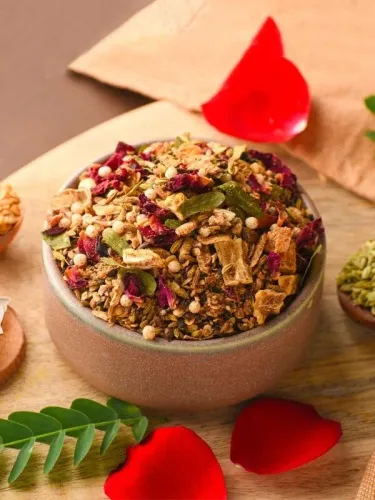
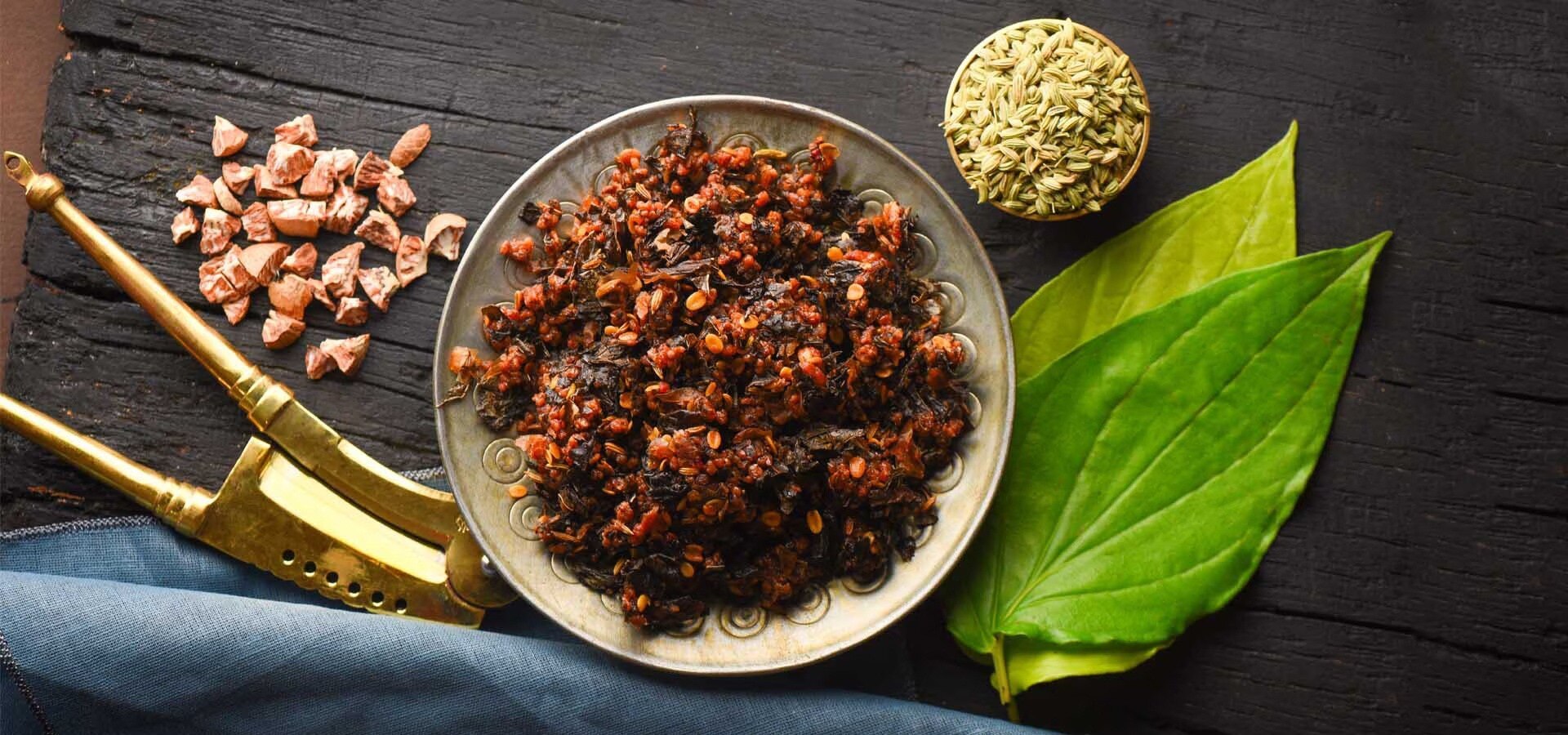
Banarasi paan mukhwas has no single compulsory recipe. It is a dry, ready-to-eat blend built around fennel, coriander seeds or dal, sweetened seeds and paan-style flavourings; some versions add dried betel-leaf flakes, coconut, gulkand, dates, tutti-frutti or supari. Fresh betel leaf is unusual because its moisture softens seeds and shortens shelf life.
| Ingredient | What the label tells you | What it contributes |
|---|---|---|
| Fennel, coriander seeds or dal | Names the seed or split pulse directly | Crunch and roasted flavour |
| Betel leaf | “Betel leaf,” “paan leaf” or dried leaf pieces confirms actual leaf; “paan flavour” does not | Herbal paan character |
| Gulkand, coconut or date | Listed by that specific name; do not infer them from a pink, sweet blend | Moist sweetness, chew and aroma |
| Cardamom, rose and spices | Look for cardamom, rose, clove, cinnamon or “spices” | Fragrance and warmth |
| Sugar or sugar-coated seeds | Sugar, syrup, dextrose or coated seeds identifies the sweetener | Sweetness and crunch |
| Menthol or permitted flavouring | Menthol or a named flavour appears in the declaration | Cooling or paan-like flavour |
| Food colour | A colour name or permitted colour declaration identifies added colour | Appearance only |
| Areca nut | Areca nut, betel nut or supari confirms its presence | Hard chew; it is carcinogenic, even without tobacco |
When comparing paan mukhwas ingredients in borivali, read the ingredient list rather than trusting “Banarasi” or “paan” on the front. A tobacco-free claim does not mean supari-free, and tobacco is not a normal mouth-freshener ingredient.
Gulkand or fresh leaf also raises moisture concerns, so check that the pack is sealed and the blend remains dry and crisp.
Receiving and preparing ingredients before the mix is made
A clean, dry receiving area protects the batch before the Banarasi paan mukhwas process begins. Check every delivery for torn packaging, insects, stones, stale odour, dampness and a readable lot label. Keep fresh leaves separate from dry ingredients.
1. Sort fennel, coriander, sesame, coconut, cardamom, spices, sugar crystals and chopped areca nut by hand or through sieves. Remove stalks, husk, grit, damaged seeds and foreign material. Inspect gulkand, dried date and coloured ingredients for mould or fermentation.
2. Wash only ingredients that arrive fresh and need washing, especially whole betel leaves, using potable running water. Do not wash dry fennel, seeds, sugar or ready-made gulkand; added water makes them harder to dry safely.
3. Drain fresh leaves, blot them, remove thick stems and spread them in a single layer. Dry them in a clean dehydrator or low oven until crisp and brittle, with no cool or flexible centre.
Dried betel-leaf flakes give longer storage and a lighter texture; fresh leaves provide a brighter aroma but demand thorough moisture removal.
4. Cut dried leaves into small flakes. Pit dried dates and dice them, portion coconut if supplied in large pieces, and cut gulkand into small pieces with an oiled knife. Keep areca nut coarsely chopped rather than powdery.
5. Weigh every prepared ingredient separately against the formula, including menthol, food colour and ground spices. Record the actual weights before roasting or blending; do not estimate sticky ingredients by spoonful.
Roasting, cooling, seasoning and blending without losing crunch
Crunch depends on order: roast each dry ingredient separately, cool it fully, add dry betel-leaf material, then blend sticky pieces and flavourings at the end. Mixing warm seeds with gulkand or candied fruit traps moisture and soon softens the whole batch.
1. Roast fennel, coriander dal, sesame, coconut and nuts in separate batches. Use gentle heat and stop when each ingredient smells fragrant; coconut and sesame brown faster than fennel. Do not roast sugar-coated seeds, gulkand or flavouring.
2. Spread every roasted batch on a wide tray until it reaches room temperature. A warm seed can create condensation inside the container, dissolving sugar and making crisp pieces leathery.
3. Use fully dried betel-leaf flakes, not fresh chopped leaf. Fresh leaf brings enough moisture to soften seeds and shorten shelf life; dried flakes give a sharper leaf note and a more stable texture.
4. Cut dried dates, tutti-frutti and other sticky pieces into similar small cubes. If using gulkand, use a dehydrated or thick, low-moisture form; wet gulkand belongs in a fresh preparation, not a shelf-stable dry blend.
5. Combine the cooled seeds, coconut, betel-leaf flakes, cardamom and spice powders first. Add the sticky pieces in small portions while turning gently, so they distribute without smearing.
6. Add sugar-coated seeds, rose notes, menthol and permitted flavouring last, after the mixture is cool. Blend briefly; excessive stirring chips coatings and drives delicate aromas away.
Taste a sample for crunch, even distribution and lingering moisture before weighing and sealing.
A practical home-scale method with quantities and timing
For a 200 g trial batch, use dried betel-leaf flakes rather than fresh leaves: fresh leaf adds moisture, softens the mix and shortens its shelf life. This is how paan mukhwas is prepared at home:
1. Weigh 100 g fennel seeds, 25 g coriander dal, 15 g sesame seeds, 15 g desiccated coconut, 10 g dried betel-leaf flakes, 10 g sugar-coated seeds, 10 g chopped dried date or candied fruit, and 10 g cardamom seeds. Use dry gulkand granules, not wet gulkand, if you want its rose flavour.
2. Roast fennel, coriander dal and sesame separately in a thick pan at 110–130°C. Stir continuously for 3–5 minutes, removing each ingredient when aromatic but still pale; browning signals scorching, not better flavour. Toast coconut for only 1–2 minutes.
3. Spread every roasted ingredient on a tray for 15 minutes. Do not blend while warm: trapped steam makes the finished mukhwas chewy.
4. For a supari-free batch, omit areca nut and add 10 g extra fennel or coconut. For the areca-nut version, add 20 g finely chopped supari after cooling; areca nut is carcinogenic, even without tobacco.
5. Mix the cooled ingredients with the date, fruit, cardamom and a pinch of permitted menthol flavouring, if used. Keep pieces similar in size so every spoonful has both crunch and chew.
6. Leave the blend uncovered for 20 minutes, then seal it in a completely dry airtight jar. Discard it if condensation appears or the texture turns sticky.
Final checks, packaging and what to verify in a Borivali product
A maker seals the blend only after every ingredient is cool, dry and evenly distributed. Seeds should remain crisp, sugar should not look wet or clumped, and gulkand, coconut or dried date pieces should not leave sticky patches.
A direct production statement is the only reliable way to know how banarasi paan mukhwas is made in borivali; the name alone does not fix a recipe.
Check these details before buying:
- Read the complete ingredient list, including areca nut, betel leaf, gulkand, coconut, date, cardamom, menthol, spices, sugar and food colour.
- Treat “tobacco-free” as different from “areca-nut-free.” Areca nut is carcinogenic to humans, so a sweet, dry or attractive mukhwas does not remove that risk.
- For packaged food, look for net quantity, batch or lot number, date marking, manufacturer or packer name and address, allergen information where applicable, storage instructions, and the FSSAI licence details.
- Reject a pouch with a broken seal, condensation, swollen packaging, missing batch details or a stale smell.
- For loose mukhwas, ask when it was prepared, whether it contains supari, and how it was stored. An airtight food-grade container protects crunch from Borivali’s humidity.
A Sujyoti Foods LLP listing gives you a useful comparison point only when its displayed ingredients and pack details match the product supplied.
| Product form | What you can verify | Main limitation |
|---|---|---|
| Sealed pack | Label, batch, date and storage directions | Formula still varies by maker |
| Loose product | Freshness and visible texture | No dependable label trail |
| “Without tobacco” | Tobacco claim | Does not exclude areca nut |
Related product
 | Mukhwas Pan in Banaras: The tradition of love, happiness and host ... Banarasi Pan is very popular since the time of the Mughals. View product → |
Frequently asked questions
What ingredients are used in Banarasi paan mukhwas?
The base commonly includes fennel, coriander seeds or dal, sweetened seeds and paan-style flavourings. Recipes can also contain dried betel-leaf flakes, coconut, gulkand, dates, tutti-frutti or supari.
Why is fresh betel leaf usually not used in paan mukhwas?
Fresh betel leaf adds moisture, which softens seeds and shortens the product’s shelf life. Dried betel-leaf flakes provide flavour without adding as much moisture.
How is paan mukhwas prepared without losing its crunch?
Roast ingredients as separate groups, allow them to cool completely, then add seasoning and blend gently. Mixing while warm can trap moisture and soften the finished product.
What should you verify when buying Banarasi paan mukhwas in Borivali?
Check the ingredient list, batch number, packed-on or manufacturing date, best-before date, food-business details, intact seal and storage instructions. Confirm whether the mix contains supari or other ingredients you avoid.